Choosing an artist
How to Choose a Tattoo Artist in Kolkata
How to judge a tattoo artist's portfolio, the hygiene standards to insist on, the red flags worth walking away from, and the questions to ask before booking.
By Soniya · 8 min read · Updated 15 August 2026
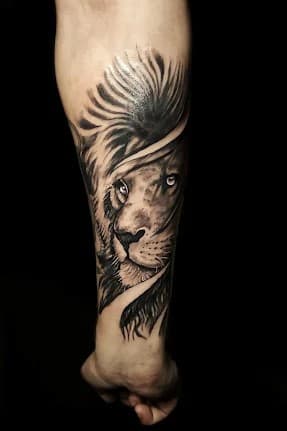
You are choosing something permanent, from someone whose work you can only judge by photographs they selected themselves. Here is how to narrow that gap — including the parts most people skip.
Ask to see healed work
This is the single most useful thing in this guide, and almost nobody does it.
Every tattoo looks sharp immediately after it is finished. The skin is inflamed, the lines are crisp, the contrast is at its peak, and the photo is taken under good light within minutes. That photo tells you very little. A tattoo photographed three to six months later, fully healed, tells you everything: whether the lines held, whether the shading settled evenly, whether the ink stayed where it was put.
Any artist confident in their work will have healed photos and will be glad you asked. Hesitation or deflection on this question is itself the answer.
Match the artist to the style
Tattooing is not one skill. Fine line, traditional, realism, script, blackwork and colour work all demand different techniques, and being excellent at one says nothing about the others.
Look through a portfolio for repeated examples of the style you want, not one good example among many others. An artist who has done forty botanical fine line pieces is a safer bet for your botanical fine line piece than a more famous artist who mostly does colour realism.
If an artist tells you a particular style is not their strength and points you elsewhere, that is a sign of a good artist, not a weak one.
The hygiene checklist
This is non-negotiable regardless of how good the work looks. You are getting an open wound, and the risks of poor practice include hepatitis B, hepatitis C and HIV.
What should happen, every time:
- Needles come out of a sealed sterile package, opened in front of you. Not from a drawer, not pre-loaded before you arrive.
- Fresh gloves, put on in front of you, and changed if the artist touches anything outside the sterile field.
- Ink poured into fresh single-use caps for your session, and discarded afterwards — never poured back into the bottle.
- Barrier film or disposable covering on the machine, clip cord, work surfaces, and anything that gets touched mid-session.
- Reusable tools (grips, tubes) sterilised in an autoclave, not just wiped or soaked in disinfectant.
- A sharps container for needle disposal — not a bin.
- Clean, uncluttered workspace with a wipeable surface. Not a bedspread or a carpeted floor.
You are entitled to ask about every one of these before booking, and a professional will answer without being defensive. This applies equally to at-home sessions — the setting changes, the protocol does not.
Red flags
- No healed photos available, or evasiveness when asked.
- A portfolio of images that look stylistically inconsistent — a common sign the work is not all theirs.
- Pressure to book immediately, or to go bigger than you asked for without explaining why.
- Unwillingness to discuss hygiene practices.
- Quoting far below everyone else. That saving comes from somewhere, and it is usually consumables.
- No consultation before the session for a custom piece — meaning the design is being improvised on the day.
- Willingness to tattoo someone visibly drunk, or under 18.
- Dismissiveness when you ask to adjust the stencil placement.
Questions worth asking
- 1.Can I see healed photos of work in this style?
- 2.Is the quote for the whole piece or per hour, and what does it include?
- 3.Are touch-ups included, and for how long?
- 4.How do you handle sterilisation and single-use equipment?
- 5.How many revisions of the design do I get before the session?
- 6.Roughly how long will this take, and would you split it across sittings?
Trust the consultation
A consultation tells you as much as a portfolio. Does the artist listen to what you want, or immediately redirect to what they prefer drawing? Do they explain why a design needs to be a certain size, or just agree with everything? Do they raise concerns about placement or longevity?
An artist who tells you honestly that your idea will not work at the size you want is far more valuable than one who says yes to everything and hands you a problem in three years.
A note on studios versus home setups
A permanent studio is not automatically safer than an at-home artist, and an at-home artist is not automatically riskier. What matters is the protocol, not the postcode. The checklist above applies identically to both — ask the same questions and expect the same answers either way.
We are happy to answer every question on this list before you book anything. If any artist is not, that tells you what you need to know.