Planning
Covering Up or Removing a Tattoo: Your Real Options
Cover-up, rework, laser removal or leaving it alone — an honest look at what each option can and cannot do, what makes a tattoo hard to cover, and how to decide.
By Soniya · 7 min read · Updated 15 August 2026
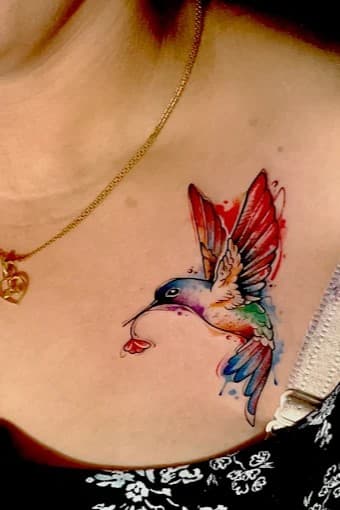
Plenty of people are walking around with a tattoo they would undo. The good news is that you usually have options. The less good news is that the options are more constrained than the internet suggests, and knowing the constraints upfront saves a lot of disappointment.
Option one: rework
Sometimes the tattoo does not need replacing — it needs finishing. Faded linework can be redrawn, patchy shading can be evened out, and a design that was executed poorly can often be tightened up while keeping the original concept.
This is the cheapest and least invasive option, and it is worth asking about before assuming a cover-up is needed. It works well when the design itself is fine and the execution or the ageing is the problem.
Option two: cover-up
A cover-up puts a new design over the old one. It is the most common solution, and a skilled artist can do genuinely impressive things with it — but it works within hard physical limits.
What makes a tattoo easy to cover
- It is light — thin lines, faded ink, minimal solid black
- It is small relative to the space available
- It sits somewhere with room to expand around it
- It has no heavy dark saturation
What makes it hard
- Heavy solid black. Ink does not lift ink — you cannot put a light colour over dark and have it show. The new design must be at least as dark in those areas.
- Large size. A cover-up almost always needs to be bigger than the original, often significantly.
- Scarring from the original tattoo. Scar tissue takes ink unevenly and limits what is possible.
- Hands, fingers and feet, where skin quality and space both work against you.
The rule that surprises people most: a cover-up is a design constrained by what is already there. You are not choosing freely from everything you might want — you are choosing from what will successfully hide the existing piece. Going in flexible about the design gets a far better result than arriving fixed on one idea.
Option three: laser removal
Laser breaks the ink into fragments small enough for your body to clear away over the following weeks. It is done by dermatology and laser clinics rather than by tattoo artists, and it is worth understanding what it involves before assuming it is the easy answer.
- It takes multiple sessions — commonly somewhere between six and twelve, sometimes more, spaced six to eight weeks apart.
- It is generally reported as more painful than getting the tattoo was.
- It is expensive. Full removal typically costs considerably more than the original tattoo did.
- Results vary by ink colour. Black responds best. Greens, light blues and some yellows are notably stubborn.
- Complete removal is not guaranteed. Faint ghosting often remains, and some tattoos never fully clear.
- It carries real risks on Indian skin tones in particular — pigment changes, both lightening and darkening of the treated skin, are a genuine possibility. Choose a clinic experienced with your skin type, and insist on a patch test.
Option four: partial laser, then cover up
This is often the best answer for a difficult tattoo, and it is underused. A few laser sessions lighten the existing ink enough to widen what a cover-up can achieve, without the cost and session count of full removal. You get a much freer choice of new design at a fraction of the removal commitment.
If you have a dark, heavy piece you want replaced with something lighter or more delicate, ask about this route specifically.
Option five: leave it
Worth saying plainly. Plenty of people who dislike a tattoo at year two have made peace with it by year six. If it is not visible day to day and the feeling is embarrassment rather than genuine distress, waiting is free and closes off no options.
Getting an honest assessment
Send a clear, well-lit photo of the existing tattoo, straight on, and say what you would ideally want instead. You will get a straight answer about which of the routes above is realistic — including being told that a cover-up will not work at the size you are hoping for, or that laser first is the sensible path.
An artist who promises they can cover anything with anything is not being straight with you.