Styles
Small Tattoo Ideas for Women That Actually Age Well
Small tattoo ideas that still look good in ten years — which designs, line weights and placements survive at small scale, and which quietly turn into a blur.
By Soniya · 7 min read · Updated 15 August 2026
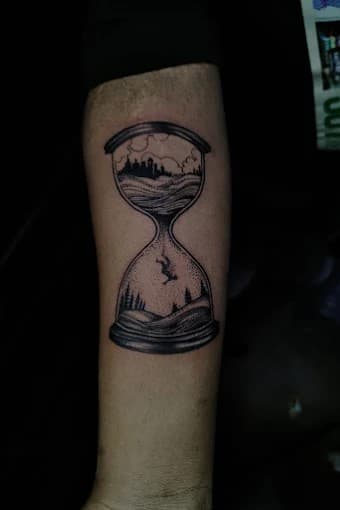
Small tattoos are the most common first piece, and for good reason — they hurt less, cost less, heal faster, and you can place them somewhere easy to live with. But small is also where most of the bad ageing happens, because the thing that makes a tiny tattoo look crisp on day one is exactly what fails over a decade.
So rather than a gallery of designs to copy, here is the more useful thing: what actually holds up at small scale.
The one rule that governs everything
Tattoo ink spreads slightly in the skin over years. This is normal, unavoidable, and happens to every tattoo by every artist. On a large piece it is invisible. On a small piece where two lines sit half a millimetre apart, that spread merges them into one thicker line — and the detail you paid for disappears.
The practical version: the smaller the tattoo, the fewer separate elements it can contain. A design with six distinct details at two inches is a design with one grey smudge at year eight.
What works small
Single-subject botanicals
One stem, one sprig, one small bloom. Botanical work suits small scale because the shapes are organic — slight softening over time reads as natural rather than as damage. A single fern frond or a sprig of wildflower ages gracefully in a way a detailed rose at the same size does not.
Script and lettering, kept short
A word, a short phrase, a date, a signature. Script works small provided the letterforms have room to breathe — the failure mode is cramming a full sentence into two inches, where the loops fill in and the whole thing becomes illegible. Fewer words at a larger size beats more words squeezed down, every time.
Simple symbols and line drawings
Moons, mountains, waves, small animals rendered as a continuous line, geometric shapes. These are built from few strokes with clear space between them, which is precisely the structure that survives ink spread.
Minimal silhouettes
Solid shapes with no internal detail — a filled crescent, a small solid heart, a simple bird form. Solid black holds better than anything else over time, because there is no fine internal spacing to lose.
What does not work small
- Portraits and faces. These need size to read as a likeness. Small portraits look approximate immediately and unrecognisable within a few years.
- Dense realism. Shading gradients need room. Compressed into a small area they flatten into a uniform grey patch.
- Detailed mandalas and heavy geometry. Beautiful at scale, and a solid dark disc at two inches after a decade.
- Very fine script in a delicate font at tiny size. The thin strokes are the first thing to disappear.
- Anything with text under about 4mm letter height. It will not stay legible.
- Watercolour-style work without a line structure. Colour without containing linework spreads outward and loses its shape faster than most people expect.
Placements that suit small pieces
Placement affects longevity as much as design does. Skin that gets constant friction or high sun exposure ages tattoos noticeably faster.
- Inner forearm — low friction, easy to keep out of the sun, easy to see yourself
- Back of the upper arm — very low friction, ages exceptionally well
- Behind the ear or nape of the neck — discreet, low friction, though hair care products need keeping off it
- Ankle (inner side rather than the bone) — good, provided footwear does not rub it
- Collarbone — a popular placement for small script, and generally ages well
- Ribs — works, but the skin stretches with weight change, so leave a little room in the design
Placements to think twice about for small work: fingers, hands, feet and the palm side of the wrist. All are high-friction, high-regeneration areas where small tattoos fade fastest and often need touching up within a year or two.
How small is too small?
As a rough working guide, most designs need at least an inch and a half to two inches in their longest dimension to hold their structure long-term, and simpler designs can go smaller than detailed ones. If an artist suggests going slightly bigger than you planned, it is almost always this — not an upsell.
The honest test is to ask: if every line in this design got 30% thicker, would it still read? If the answer is no, it needs to be bigger or simpler.
Making a small tattoo last
- 1.Sunscreen, once healed. UV is the main cause of fading and blurring, and Kolkata gets strong sun most of the year.
- 2.Follow the healing process properly — picking at flakes on a small tattoo can remove a meaningful proportion of it.
- 3.Keep it moisturised long-term. Dry skin makes any tattoo look duller.
- 4.Expect to touch up high-friction placements. Budget for it rather than being surprised by it.
Bring your references and we will tell you honestly whether the design works at the size you want, or whether it needs to grow slightly to survive. That conversation is free and it saves a lot of regret.