Planning
Tattoo Pain by Placement: An Honest Chart
Which tattoo placements hurt most and least, why nerve density and bone proximity matter, and how to plan a first tattoo around it.
By Soniya · 5 min read · Updated 15 August 2026
Pain is subjective and varies a lot between people, so treat any pain chart as a rough guide rather than a promise. That said, the pattern behind it is consistent and worth understanding, because it lets you plan sensibly rather than guess.
What actually determines how much it hurts
- Distance from bone. Thin skin directly over bone — ribs, sternum, ankles, elbows, spine — transmits vibration straight into it. This is the single biggest factor.
- Nerve density. Hands, feet, the inner arm and the neck carry far more nerve endings than the outer arm or thigh.
- Fat and muscle padding. Padding cushions the needle. Outer thigh and outer upper arm are comfortable largely for this reason.
- Session length. Anywhere hurts after four hours. Endurance matters as much as raw sensitivity.
- Your own state. Tired, hungry, hungover or anxious all measurably lower pain tolerance.
Easiest placements
Good choices for a first tattoo — well padded, away from bone, and straightforward to heal.
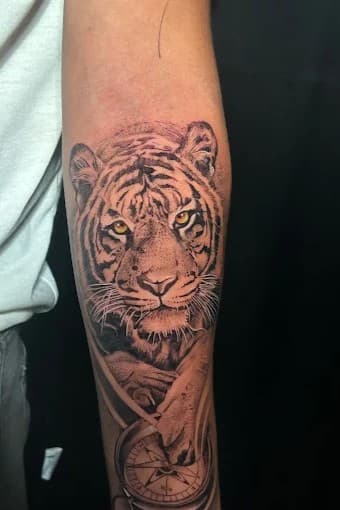
- Outer forearm — the classic first tattoo spot
- Outer upper arm and shoulder cap
- Outer thigh
- Calf
- Upper back, across the shoulder blades
Moderate
Noticeably sharper, but manageable for most people, especially for shorter sessions.
- Inner forearm — thinner skin, more sensitive than the outer side
- Lower back
- Front of the thigh
- Wrist
- Lower leg near the shin
Difficult
Worth planning around. Doable, but not where most artists would suggest starting.
- Inner bicep — thin skin, high nerve density
- Elbow and the ditch of the elbow
- Knee and behind the knee
- Collarbone
- Neck and throat
- Stomach
Most intense
Thin skin directly over bone, or unusually dense nerve clusters. Very rewarding placements, but go in prepared.
- Ribs and sternum — consistently reported as the hardest
- Spine
- Hands and fingers
- Feet and ankles
- Armpit
- Inner thigh and groin
Hands, fingers and feet are also the placements that age worst. Skin there regenerates quickly and takes constant friction, so these tattoos fade and blur faster than anywhere else and often need touch-ups within a year or two. That is worth weighing alongside the pain.
Making any placement easier
- 1.Eat a proper meal beforehand and stay hydrated. This makes a bigger difference than people expect.
- 2.Do not drink alcohol the night before.
- 3.Sleep well — tiredness lowers pain tolerance measurably.
- 4.Breathe steadily rather than holding your breath. Tensing up makes it worse.
- 5.Take breaks. Ask for one whenever you need it.
- 6.Break large pieces across multiple sittings rather than pushing through one very long session.
Numbing creams exist, but talk to your artist before using one. Some change the skin's texture in ways that affect how it takes ink, and applying one without telling your artist can genuinely compromise the result.
Should pain decide your placement?
Partly, for a first tattoo — starting somewhere manageable teaches you how you personally handle it, which makes every decision afterwards easier. But for a piece you have wanted for years in a specific spot, a few hours of discomfort is a poor reason to compromise on something permanent.